Paris in Full: The American Traveller's Luxury Planning Guide
Itinerary and planning 12 min read
From palatial suites on the Right Bank to chef's table dinners and after-hours museum access, here is exactly how to do Paris at the highest level.
Paris rewards those who plan deliberately. The city has a well-earned reputation for being magnificent and occasionally unforgiving, and the gap between a mediocre trip and an exceptional one almost always comes down to decisions made before you board the plane. For American travellers arriving with real budget flexibility, the question is never whether to spend, it is where spending actually translates into a materially better experience and where it does not. This guide cuts straight to the practical: which palace hotels justify their extraordinary rates, which Michelin tables are genuinely worth the weeks-long wait for a reservation, which private experiences are more than glorified tourist packages, and where the luxury market in Paris is simply selling you a logo. Use it as a working planning document, not bedside reading.
Choosing the Right Palace Hotel for Your Travel Style
Paris has an official designation called the Palace classification, awarded by the French government to properties that meet an exceptionally demanding set of criteria beyond the five-star standard. There are currently a handful that hold it, and the differences between them matter enormously depending on how you travel. The Ritz Paris on Place Vendôme is the most iconic address in the city and arguably the world. Its recently renovated rooms are spectacular, the Bar Hemingway is a legitimate destination in its own right, and the location, steps from the Tuileries and a short walk from the Louvre, is genuinely unbeatable for first-timers. Expect to pay upward of $1,500 per night for a classic room and considerably more for a suite. That is a rational investment if atmosphere and address matter to you.
Le Bristol Paris on Rue du Faubourg Saint-Honoré attracts a quieter, more residential clientele, many of them repeat visitors who value the three-Michelin-star restaurant Épicure and one of the finest hotel pools in Europe. It sits in the 8th arrondissement, convenient to the high-fashion houses and to the Champs-Élysées without being on top of the tourist chaos. The Four Seasons George V, also on the Right Bank, is the choice for travellers who want the smoothest, most operationally fluent luxury hotel experience. Its American-trained service culture means almost nothing gets lost in translation, which has genuine practical value when you are coordinating a complex itinerary. The Peninsula Paris, installed in a magnificent Belle Époque building near the Arc de Triomphe, is the newest of the group and the most design-forward, with exceptional room technology and a rooftop restaurant with views that justify a meal even for non-guests.
If you prefer the Left Bank energy of Saint-Germain-des-Prés, the Hôtel Lutetia is the only true palace hotel on that side of the river. It is smaller, more literary in spirit, and the rooms feel genuinely Parisian rather than globally luxurious, which is either exactly right or slightly disappointing depending on your expectations. Book directly with every property to access best available rates and to establish a relationship with the concierge before arrival, because a well-briefed concierge at a Paris palace hotel is worth more than almost any travel service you can buy separately.
How to Secure Michelin-Star Reservations Before You Arrive
The most common mistake American travellers make with Michelin dining in Paris is waiting until they land to figure it out. The city's most sought-after tables, Guy Savoy at the Monnaie de Paris, Le Grand Véfour in the Palais Royal, Kei for a Japanese-French hybrid that is quietly extraordinary, and Pierre Gagnaire for the most intellectually ambitious cooking in the city, book out weeks and sometimes months in advance. The practical strategy is this: decide on your dining priorities at least six to eight weeks before your trip and approach reservations the same way you would a Broadway show or a sporting event.
Most top Paris restaurants now use TheFork (called LaFourchette in France) or their own online booking systems, and many release tables at midnight Paris time. If you cannot get the specific restaurant you want, ask your hotel concierge to pursue it through their internal channels. Palace hotel concierges at properties like the Ritz or the George V maintain genuine relationships with maître d's across the city and can often access tables that appear fully booked online. This is one of the clearest and most concrete reasons to stay at a palace hotel if fine dining is central to your trip.
For a three-Michelin-star experience that offers something architecturally and gastronomically remarkable, Guy Savoy deserves serious consideration. The dining rooms overlook the Seine from inside a 17th-century mint building, and the artichoke and black truffle soup remains one of the most precisely constructed dishes in French cuisine. Budget approximately $400 to $600 per person before wine. For a more intimate two-star experience with extraordinary value relative to the caliber of cooking, look at Le Clarence in the 8th, backed by the Prince of Luxembourg, with a wine list that is almost outrageously good.
Private Museum and Cultural Experiences Worth the Premium
The Louvre, Versailles, and the Musée d'Orsay are non-negotiable for most visitors, and they are also the source of the most predictable frustration, crowds, queues, and the feeling of being processed rather than genuinely experiencing art. The solution is not to skip them but to access them differently. Several specialist operators, Context Travel being the most consistently rigorous, offer private guided visits with art historians and curators who provide access to reading rooms, print collections, and departmental areas that general admission visitors never see. A private Louvre session before public opening hours costs roughly $300 to $500 per person and transforms the experience categorically.
Versailles after hours is available through a small number of operators who hold special access agreements. An evening at the palace with the Galerie des Glaces effectively to yourself, followed by a private dinner in one of the ancillary buildings, is one of the genuinely memorable experiences Paris's luxury infrastructure can deliver. Expect to pay $800 to $1,500 per person for a well-produced version of this. Verify that any operator you book with holds the relevant accreditations and has a direct relationship with the Château rather than simply reselling access. Your hotel concierge can vet this quickly.
The Musée des Arts Décoratifs, adjacent to the Louvre along the Rue de Rivoli, offers private evening access that almost no one thinks to book, making it an excellent choice if you want a similarly immersive but less crowded equivalent. The collection of decorative arts, fashion, and jewelry design is genuinely world-class and the building itself is extraordinary.
Shopping Strategically: Where the Splurge Pays Off
Paris is the production center of the luxury goods industry, and while prices for French brands are not always dramatically lower than in the United States, the selection, the experience, and the authenticity of the context are meaningfully different. The places where spending significantly more than you might at home actually makes sense are specific. Custom and made-to-measure is the clearest case. A made-to-measure shirt from Charvet on Place Vendôme, which has been dressing heads of state since 1838, costs between $400 and $700 and requires two fittings across your trip. The result is a garment you cannot approximate anywhere else at any price.
Similarly, buying a Hermès scarf or a small leather good from the flagship on Rue du Faubourg Saint-Honoré is not about the item itself, which you can get in New York, but about the possibility of accessing pieces that are allocated exclusively to the Paris market and about the legitimacy of provenance. For serious collectors of jewelry or watches, both Cartier and Van Cleef and Arpels have their founding ateliers on Place Vendôme and offer private appointments in viewing rooms where pieces unavailable through retail channels can be presented. This requires advance arrangement through your hotel or directly with the maison's client relations team and is not available to walk-in visitors.
Where the splurge does not pay off: the luxury department stores Le Bon Marché and Galeries Lafayette carry the same international brands at similar or identical prices to what you see at home, and the experience, while pleasant, is not meaningfully different from a high-end American department store. Prioritize the maisons directly.
Private Culinary Experiences Beyond the Restaurant Table
For travellers who want engagement with French food culture beyond sitting in a dining room, there are several private experiences that are genuinely substantive rather than theatrical. A private market tour followed by a cooking session in a professional kitchen with a working chef, not a recreational instructor, is available through operators like La Cuisine Paris and through the culinary programs attached to properties like the Ritz Escoffier school. The Ritz Escoffier offers half-day intensive sessions with their pastry and cuisine teams that are technically educational and use the actual kitchen infrastructure of one of the world's great hotel kitchens.
A private wine experience in the city's remaining historic caves, the underground cellars beneath restaurants and private residences in the 5th and 6th arrondissements, is increasingly available through specialist sommeliers and wine educators. These are not tastings in a retail shop but seated, curated sessions in genuinely historic spaces with wines selected to illustrate specific regional arguments. Expect to pay $250 to $500 per person for a serious two-hour session. La Cave du Louvre, located in a 17th-century vault beneath the Rue de Rivoli, offers a more accessible version of this that works well as an introduction.
Transportation That Is Actually Worth the Cost
A private car and driver for the full duration of your Paris stay is one of the clearest examples of a splurge that pays practical dividends rather than simply status ones. Paris taxis are fine and Uber works well, but a dedicated driver who knows your schedule, meets you at the jet bridge if you arrive on a private or business class international flight, and can reposition within minutes of a call eliminates the friction that compounds across a multi-day itinerary. A full-day private car in Paris costs approximately $400 to $700 depending on the vehicle class and operator. For a couple traveling on a packed itinerary moving between palace hotels, restaurants, museums, and shopping appointments, that cost amortizes efficiently across the day.
For day trips, a private car to Versailles or to the champagne houses of Reims and Épernay (approximately 90 minutes from Paris) is categorically more efficient than any group or rail option. A day trip to Moët and Chandon or Krug in Épernay can be arranged with a private cellar tour and seated tasting for serious collectors and is best organized through your hotel concierge at least two weeks in advance. The champagne houses have tiered access programs, and the highest level, involving vertical tastings of library wines in private rooms, is simply not available to general visitors regardless of what they are willing to pay on the day.
The Best Arrondissements to Stay In and Why It Matters
Neighbourhood choice is not merely aesthetic, it determines the texture of your daily experience in ways that compound across a week. The 8th arrondissement, the traditional luxury core around the Champs-Élysées and Faubourg Saint-Honoré, is logistically efficient and socially comfortable for American visitors because its infrastructure is entirely oriented around international luxury travel. The 1st arrondissement, covering Place Vendôme, the Tuileries, and the Palais Royal, is the most centrally located and the choice that makes geographic sense if you plan to spend time at the Louvre, the Musée de l'Orangerie, and the major Right Bank landmarks. The 6th, anchored by Saint-Germain-des-Prés, is the most intellectually atmospheric and is practical for travellers oriented toward the Musée d'Orsay, the Luxembourg Gardens, and the independent gallery scene around Rue de Seine.
Avoid the 9th and the areas around Montmartre unless you have a specific cultural reason to be there. They are not unsafe but they require more transit time to reach the experiences that matter most in luxury travel and the local infrastructure does not support the level of service and convenience that palace hotel neighbourhoods do automatically. The 16th, though residential and refined, is too far west to be practical for most itineraries and is better suited to extended stays than short trips.
What Not to Spend Your Money On
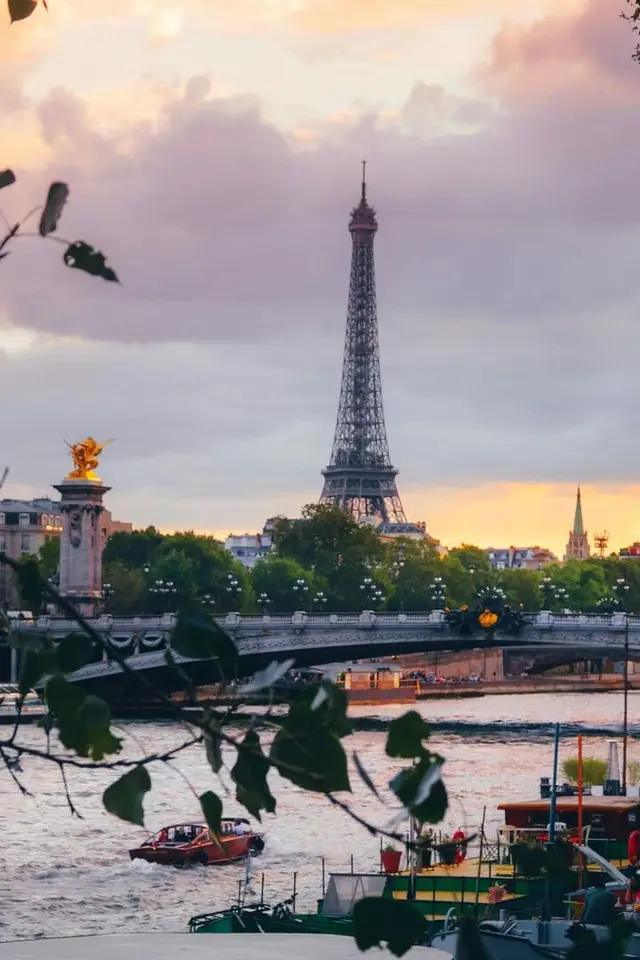
Equally important to knowing where to splurge is knowing where the Paris luxury market is selling atmosphere over substance. Dinner at the Eiffel Tower's Le Jules Verne restaurant is a perennial example: the view is undeniably dramatic, the food is adequate but not at the level of the price point, and the experience is structured around tourism rather than gastronomy. Spend that money at a genuinely great restaurant and see the tower on an evening walk along the Champ de Mars. Similarly, most of the high-priced Seine dinner cruises operate at a service and culinary level inconsistent with their pricing. A private picnic on the banks of the Seine, assembled from the prepared food counters at a great fromager or charcutier and a bottle of wine from a cave, delivers a more authentically Parisian experience at a fraction of the cost.
Spa treatments at palace hotels, while pleasant, are priced at a significant premium over excellent Parisian day spas operating at an equivalent or higher technical level. Unless the convenience of remaining in your hotel is the priority, consider Cinq Mondes or Anne Fontaine's spa programs as alternatives. The money saved is better applied to one more exceptional dinner or to the private museum access that genuinely changes how you experience the city. Paris at the luxury level rewards intentionality above almost everything else.
Keep exploring: planning Paris and Rome together · 15 hidden gems most tourists miss · Plan your Paris trip with a local
Get our free Insider Paris Guide: the neighborhoods, restaurants and hidden corners we send our own clients. No tourist traps, no filler.
Get the free guideReady to experience Paris for yourself? Plan Your Paris Trip with Chic Trip - bespoke itineraries, handpicked hotels, and local expertise.
Planning your own Paris trip? Estimate your budget with the free Paris trip cost calculator, find out how many days you need in Paris, check when to book everything in Paris, or build a day-by-day plan with the Paris itinerary planner.